Fleet tracking platform
A multi-tenant IoT telematics platform that turns live data from vehicles and devices into maps, alerts and reports. I have led the team as interim team lead since March 2025.
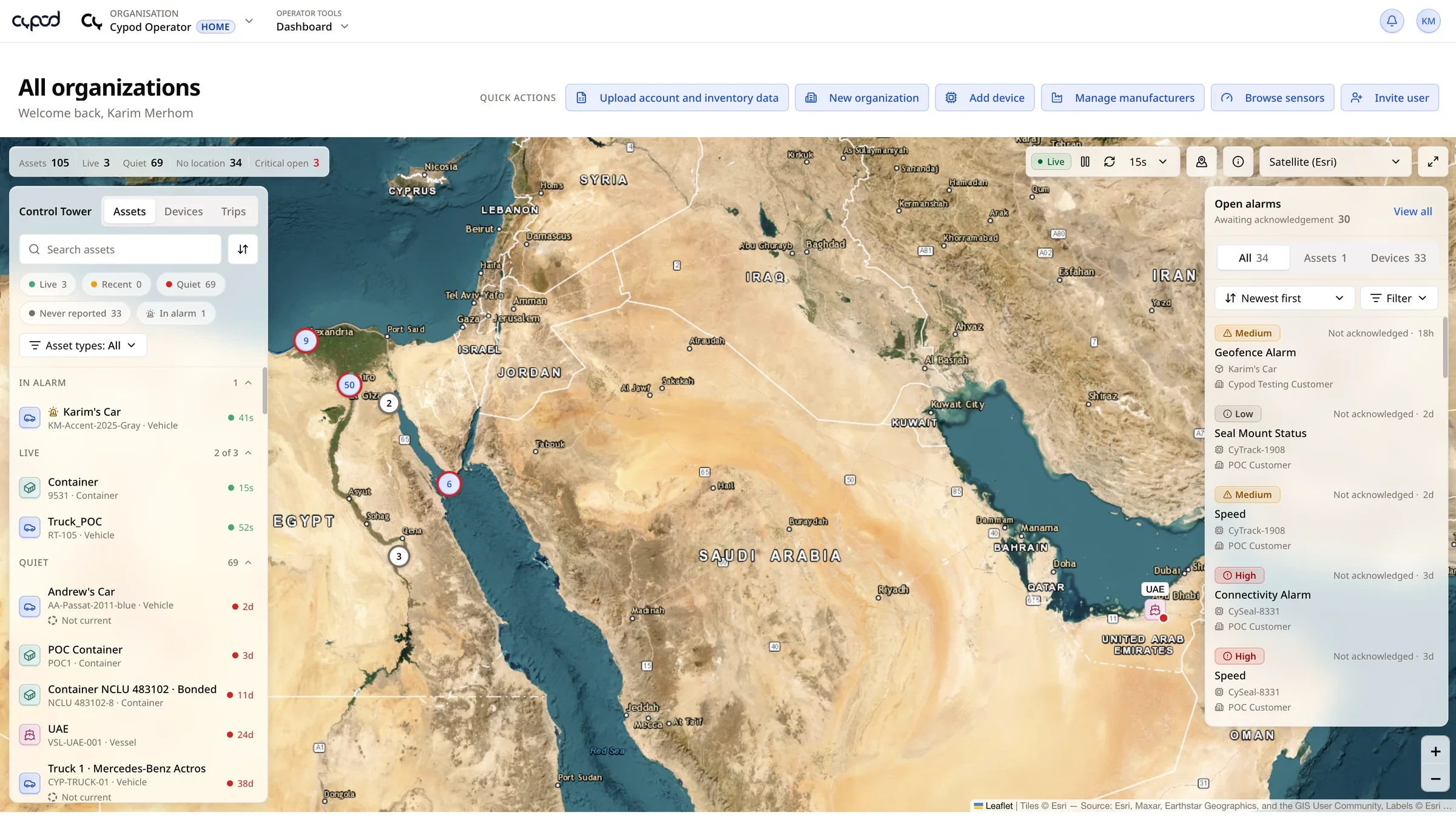
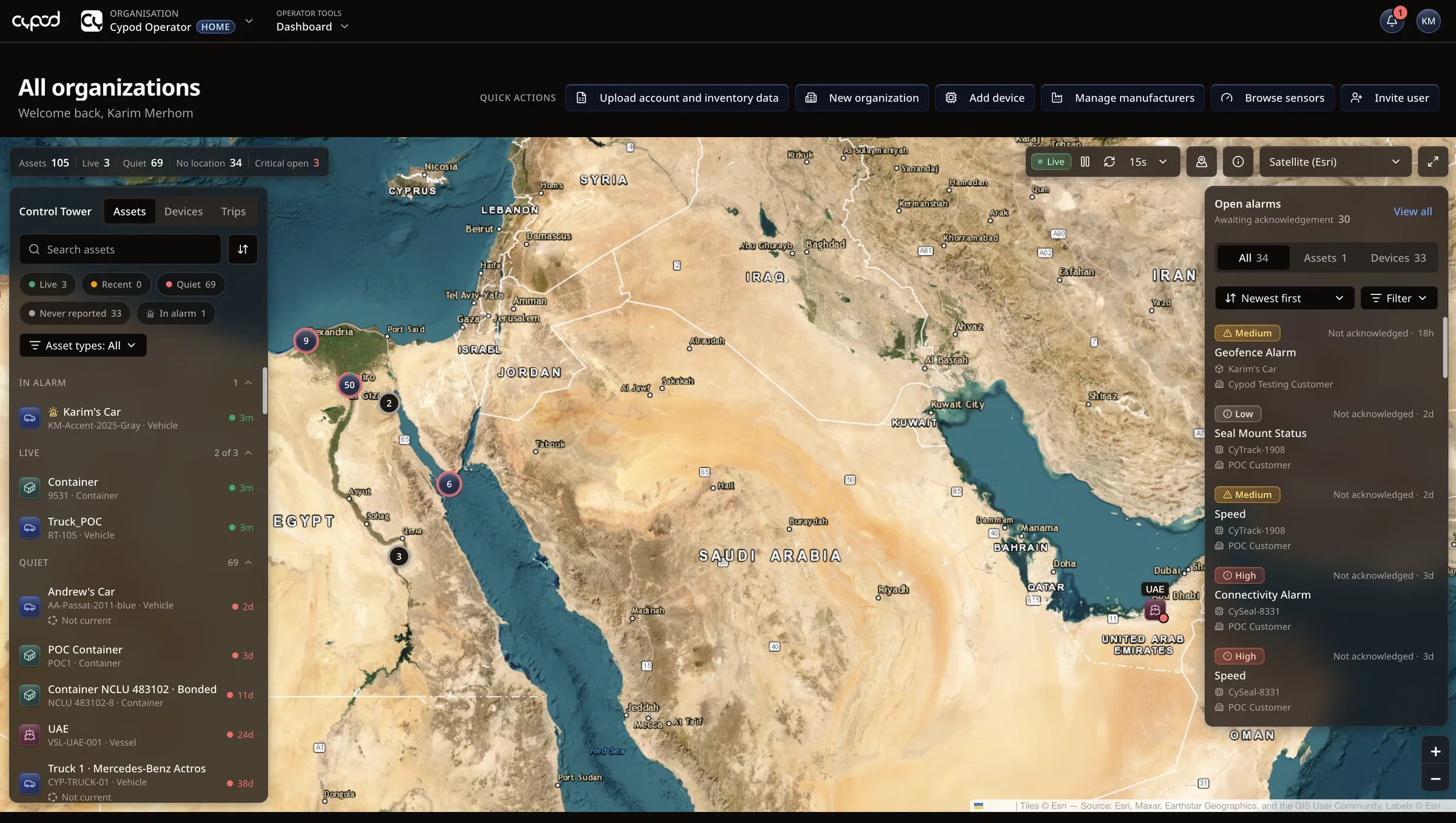
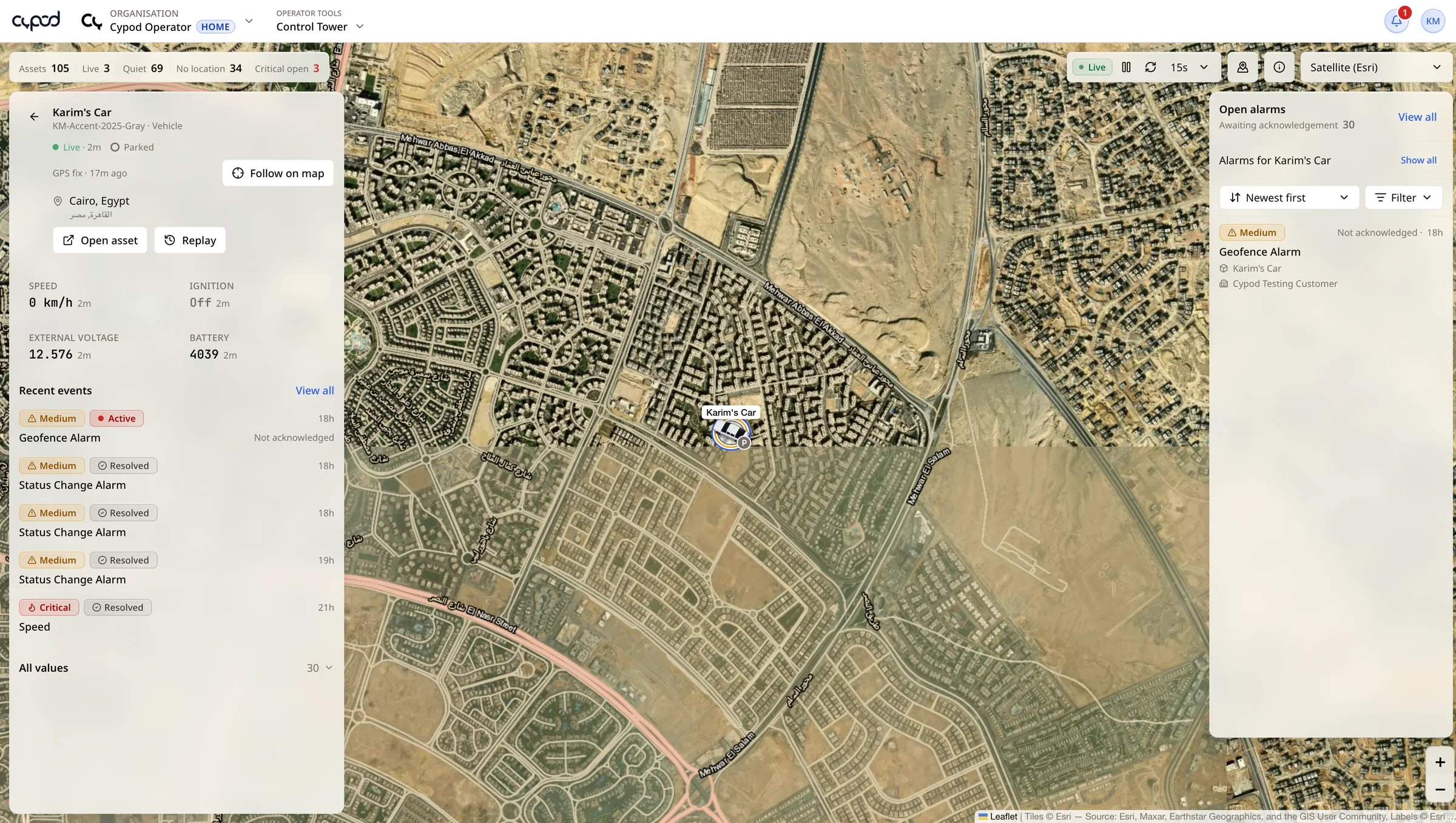
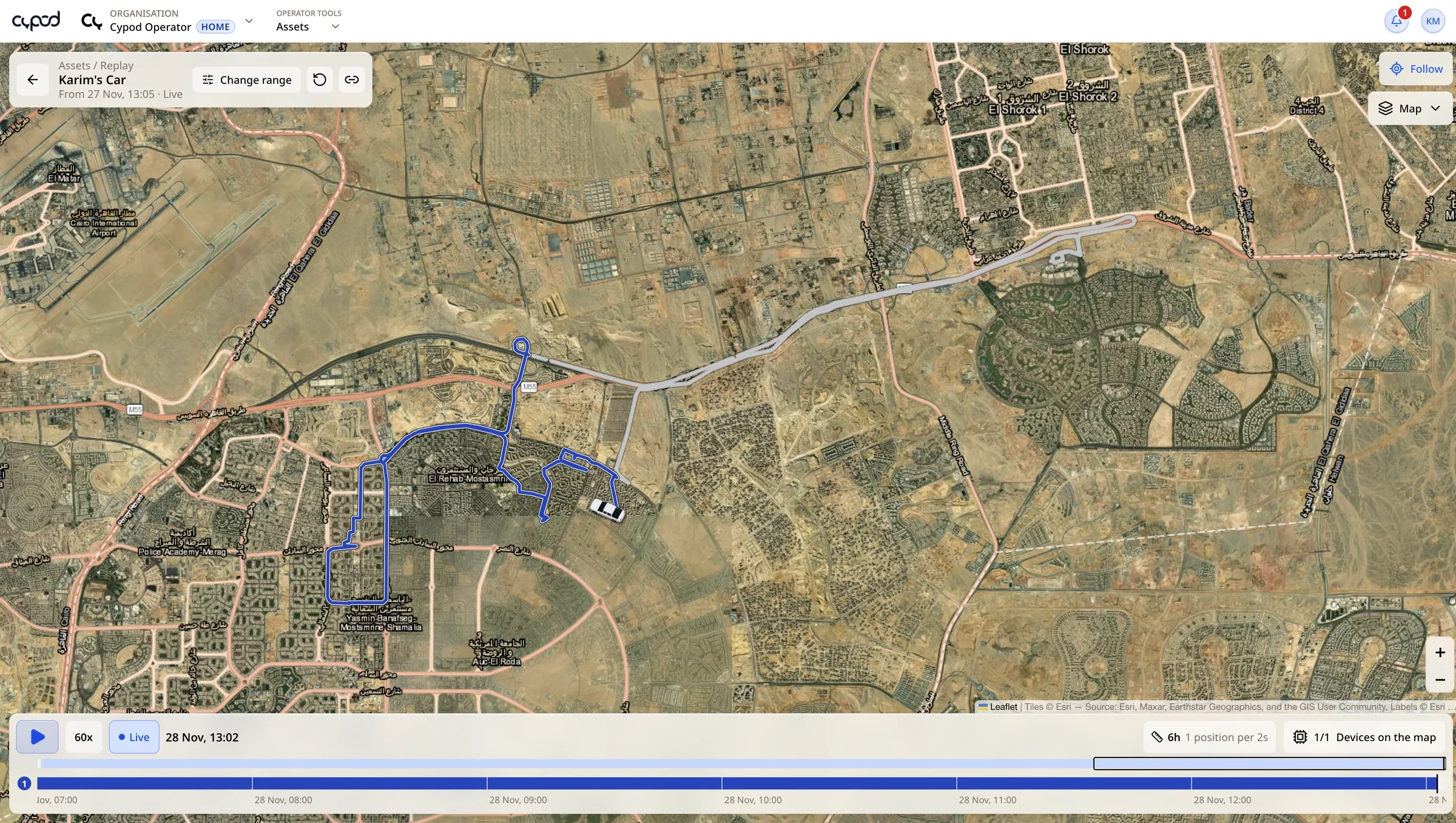
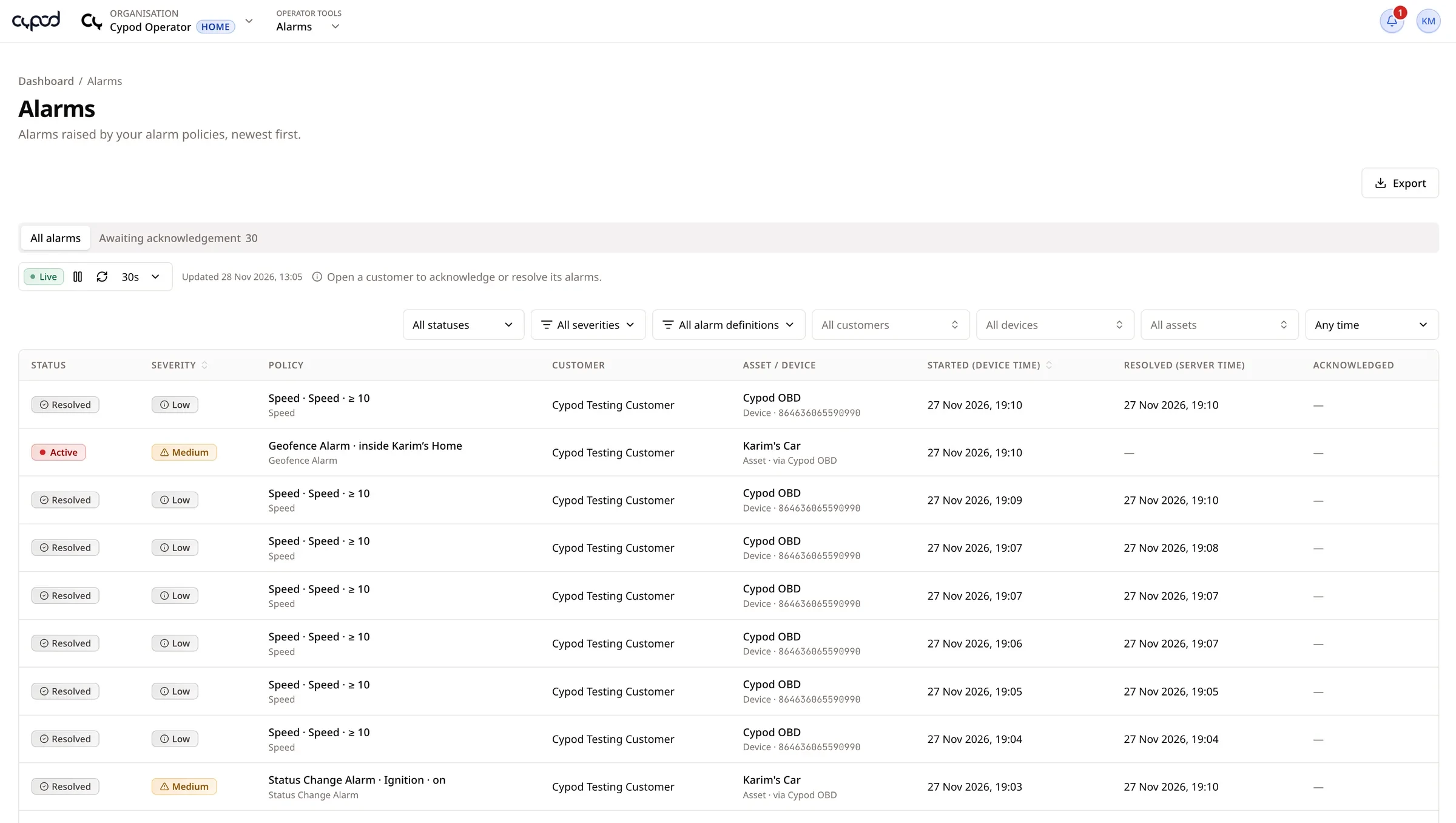
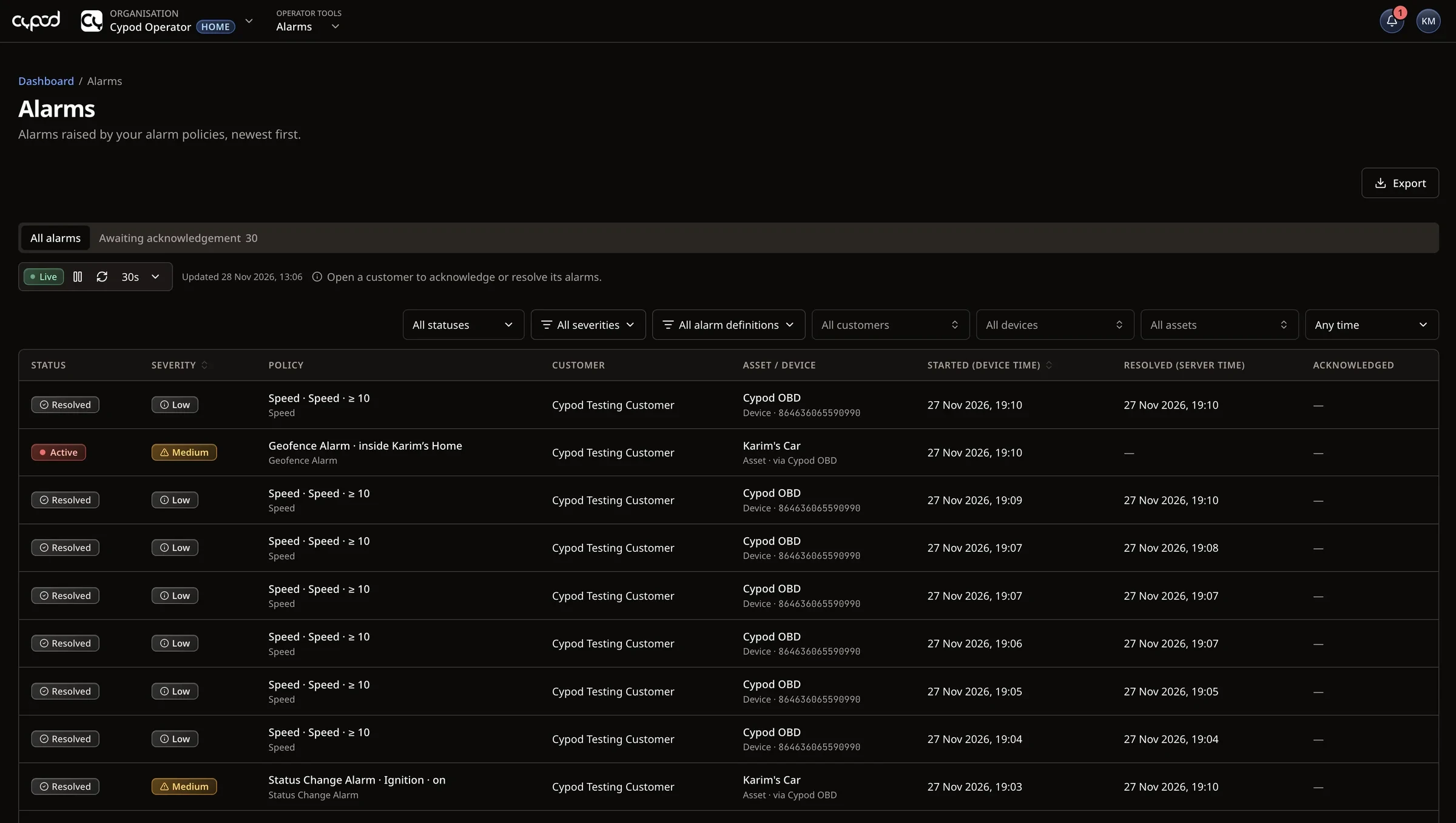
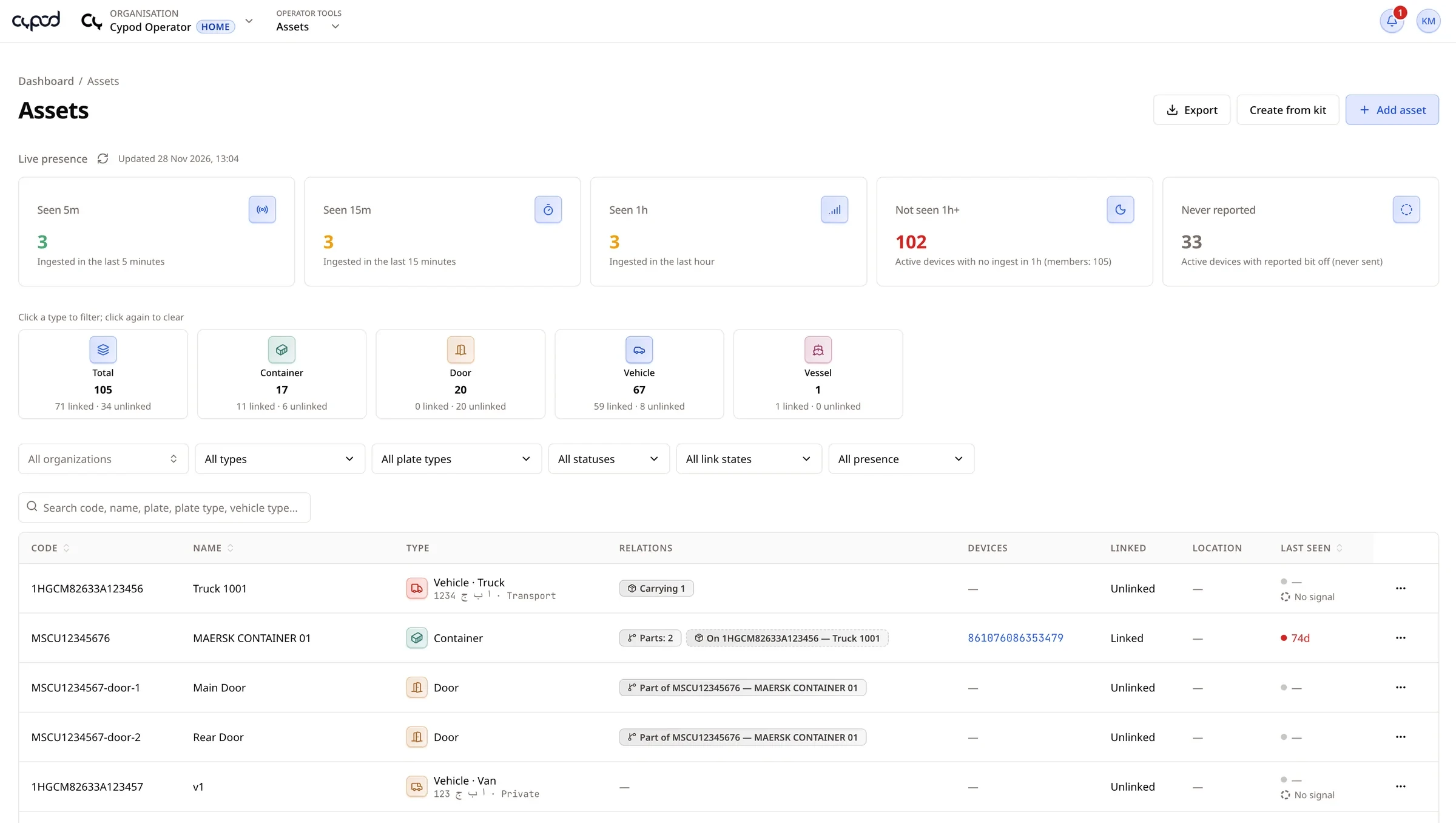
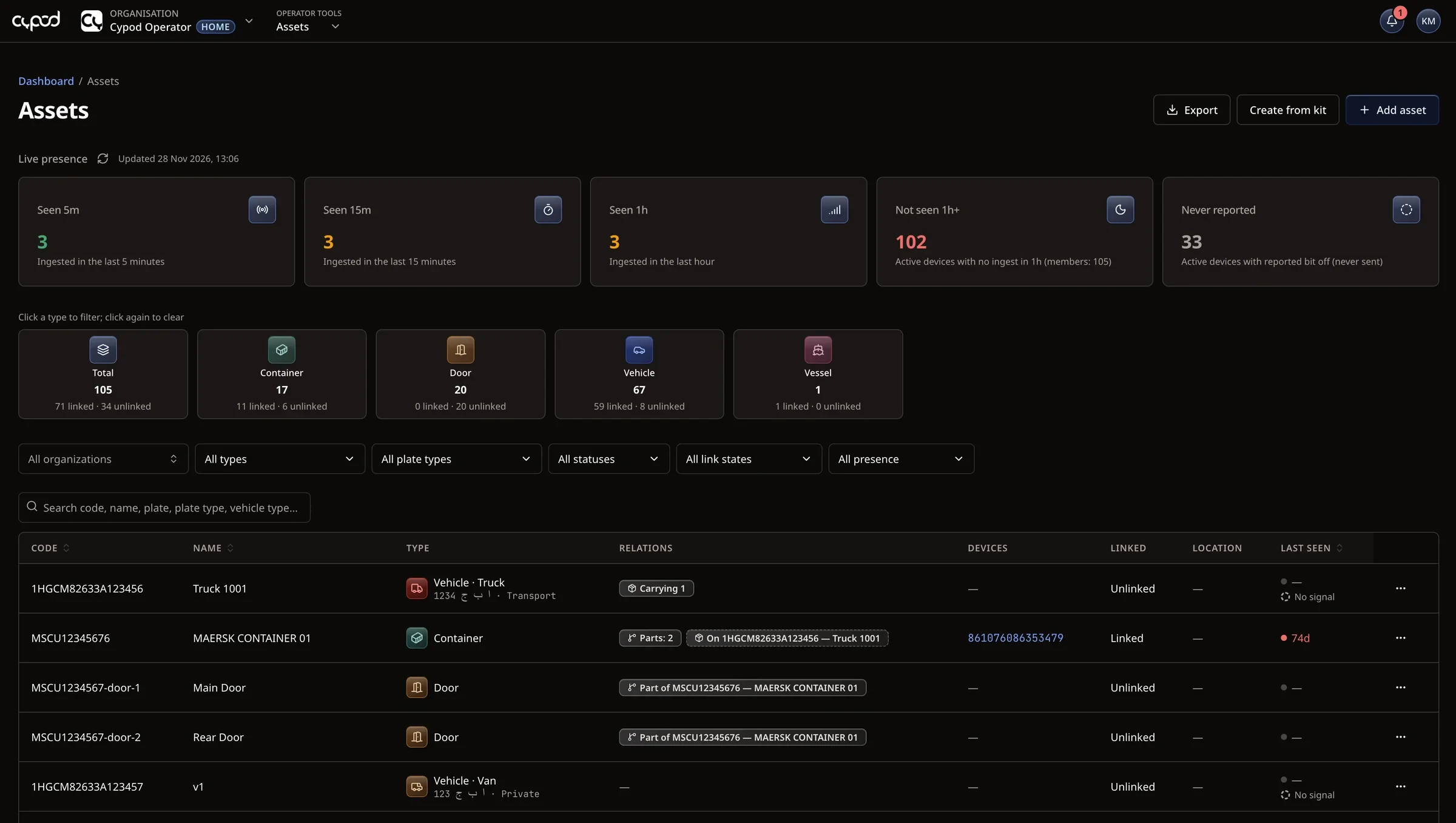
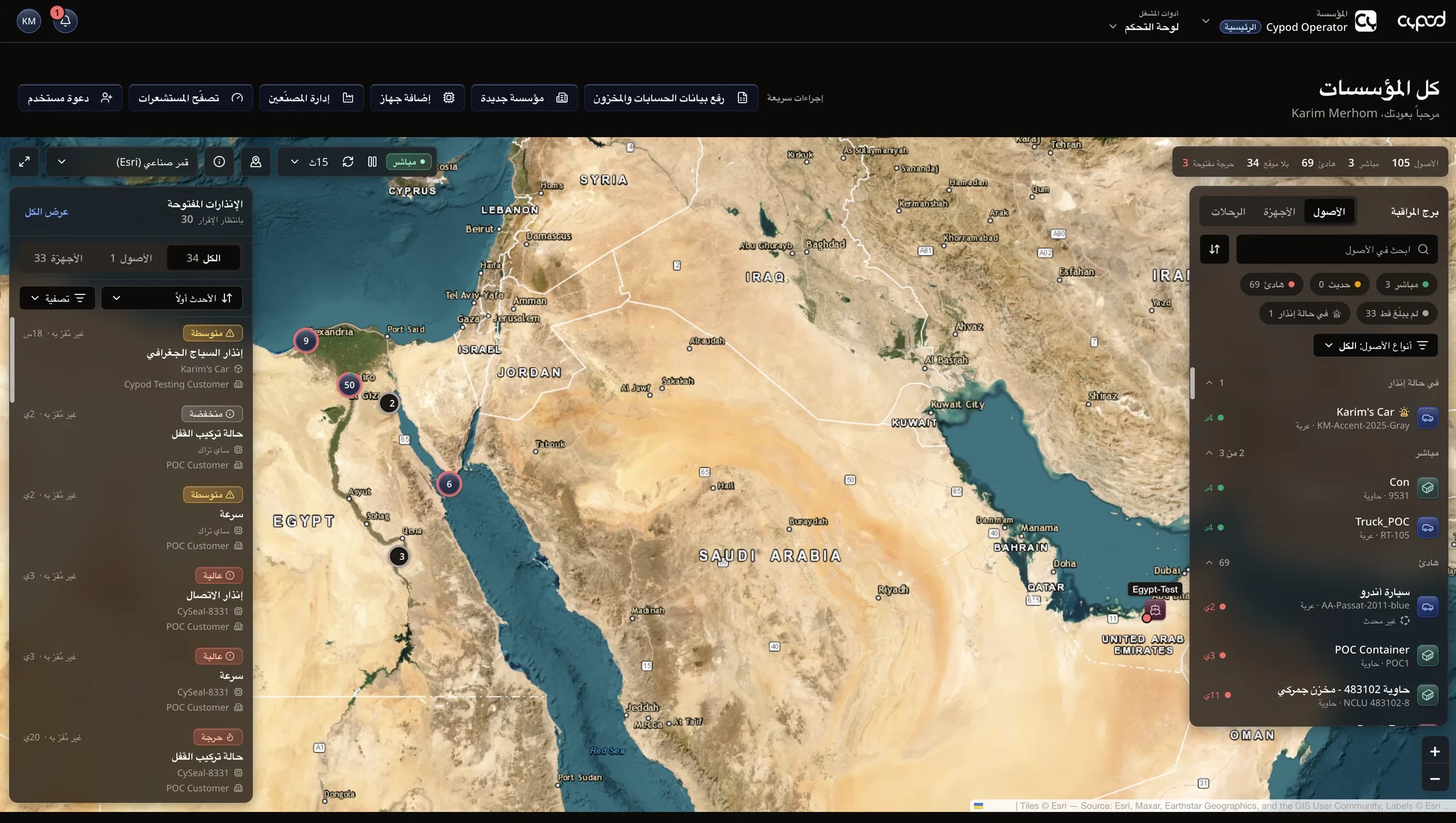
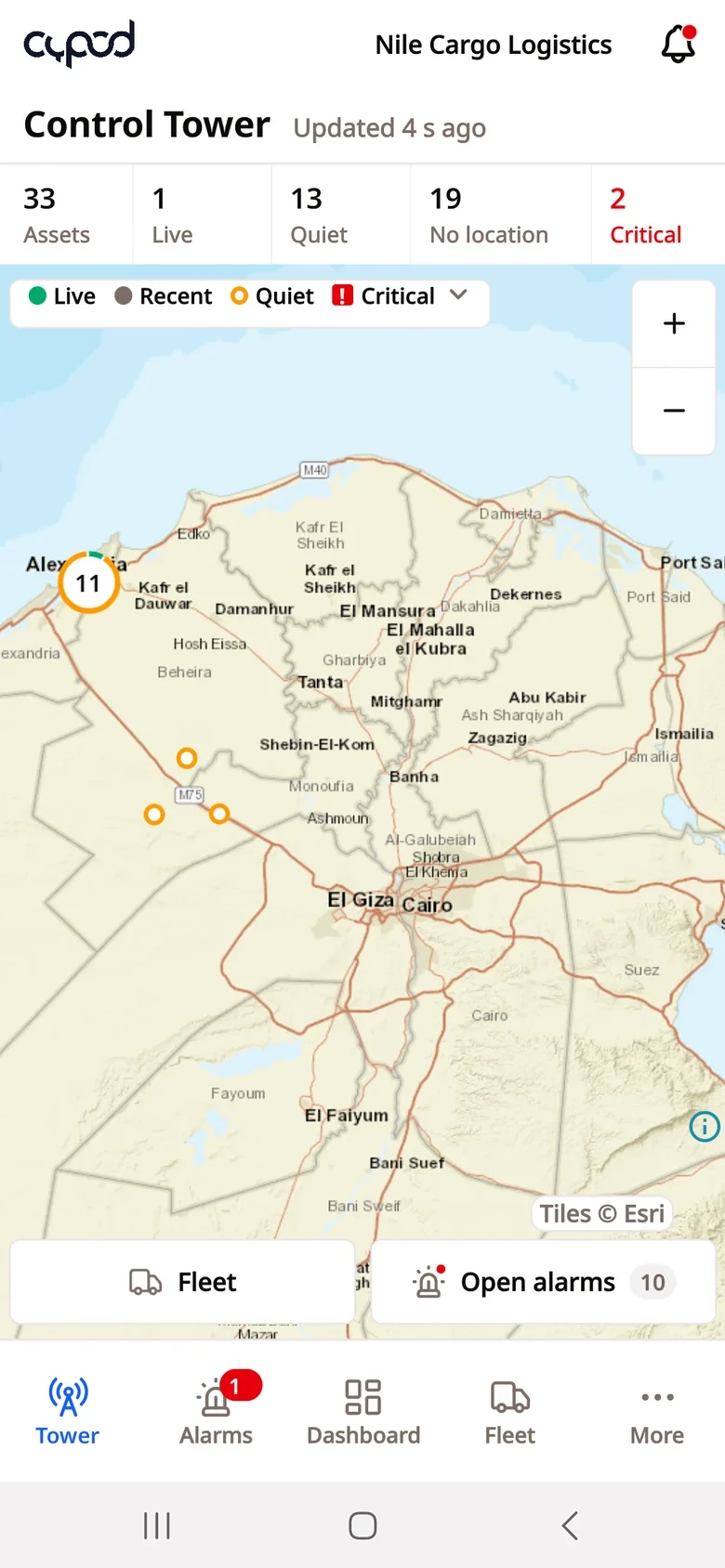
Real screens from a test account. The phone shows the Cy App. Switch the site theme to see the dashboard in dark mode.
- 15event-driven Node.js and TypeScript microservices
- 3 msaverage to process a device message, as low as 1 to 2.5 ms
- 2clients on one API, the Next.js dashboard and the Cy App
- 2languages across the product, Arabic right to left and English
The problem
Fleet operators need to see where every vehicle is right now, hear about problems the moment they happen, and pull reports for any period. They need this across thousands of devices and many separate customer accounts, in Arabic and English.
The previous platform could not keep up with that volume, so Cypod rebuilt it as event-driven microservices.
My role
I joined Cypod in November 2022 as a junior full stack engineer and was promoted to senior in January 2024. When the team lead left in March 2025, I stepped in as interim team lead.
Today I lead engineering for the whole platform: I set technical direction, review designs and code, and keep the team shipping. I still build features myself, mostly in the dashboard, the core API and the data pipeline.
What I did
Leadership
- Lead engineering for the platform, rebuilt as 15 event-driven Node.js and TypeScript microservices that talk over gRPC and RabbitMQ and run on Docker.
- Introduced team-wide quality gates: automated tests, SonarQube scans and CI pipelines with Vitest, Playwright, GitHub Actions and GitLab CI.
- Review code and mentor engineers on design and implementation.
Dashboard
- Built features in the Next.js dashboard, including live maps, camera streaming and Arabic and English support, with React, TypeScript, Tailwind CSS and TanStack Query.
- Control tower, vehicle detail, trip replay, alarms and asset screens, all usable right to left in Arabic and in dark mode.
Cy App for Android
- The platform in an operator's pocket: a control tower map of every asset, with open alarms pinned on it and a sheet per asset with live readings, follow on map and replay.
- An alarms queue sorted by severity, where operators acknowledge and resolve alarms and see why each one fired and its timeline.
- A dashboard of fleet presence and open alarms, fleet lists of assets, devices and drivers, and daily summary reports.
Backend and data
- Shaped the core REST API: authentication, multi-tenant access, background jobs, and PDF and Excel reports, with Express, Prisma, PostgreSQL and Redis.
- Built the telemetry pipeline that ingests device data over MQTT into ClickHouse and InfluxDB, bringing message processing down to a 3 to 3.5 ms average, and as low as 1 to 2.5 ms.
- Delivered the reporting, fleet map, storage and notification services, including GPS trips with Arabic and English addresses, and alerts by SMS, email and push.
Architecture
A simplified map of the system. Highlighted boxes are the parts I built.
Select any part of the systemHover or tap a box to see what it does, or step through the flow below.
Parts I built
How one GPS message reaches the screen
Key decisions
Events between services, gRPC for direct calls
RabbitMQ lets ingestion publish once while trips, the fleet map, reports and notifications each react at their own pace. When one service needs an answer from another, it calls it over gRPC with a typed contract.
The right database for each kind of data
Telemetry goes to ClickHouse and InfluxDB, which are built for time-series queries over billions of points. Accounts, permissions and settings stay in PostgreSQL, with Redis in front for caching.
One source of truth for server data
In the dashboard, TanStack Query owns everything that comes from the API. Live map data, lists and reports share caching and refetch rules instead of each screen doing it differently.
Quality gates before merge
Tests, SonarQube scans and CI checks run on every change, so a growing team can move fast without breaking production.
Next projectPathfinder